GameBot Game Agents: How Intelligent Agents Are Changing Game Development

Game development is moving beyond traditional scripted behaviors. As players expect more responsive characters, smarter opponents, and dynamic multiplayer experiences, developers are looking for new ways to introduce intelligence into their games.
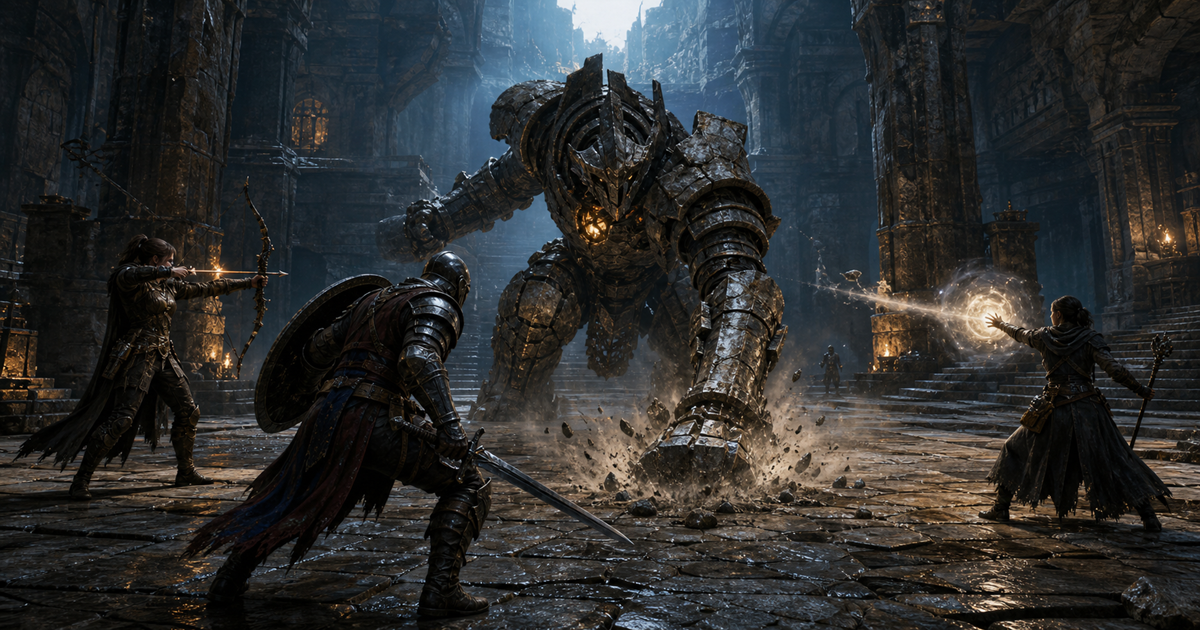
Gamebot game agents represent one approach to this evolution. By combining autonomous decision-making with existing game systems, intelligent agents can help developers build NPCs, teammates, opponents, and other interactive characters that respond to changing gameplay conditions.
Instead of relying entirely on predefined behaviors, game agents can evaluate the current situation, select appropriate actions, and adapt their behavior as the game develops.
What Are Game Agents in Games?
A game agent is an AI-controlled entity that can perceive information from a game environment, make decisions, and take actions toward a specific objective.
A traditional game bot may operate according to a fixed set of rules:
- Detect a nearby enemy
- Move toward the enemy
- Attack when within range
- Retreat when health is low
An intelligent game agent can consider a much broader set of information.
For example, an agent may evaluate:
- Its current position
- Player behavior
- Team objectives
- Available resources
- Nearby threats
- Previous actions
- Changes in the game environment
It can then determine what action is most appropriate for the current situation.
This creates more flexible behavior without requiring developers to manually define every possible scenario.
How Gamebot Game Agents Differ From Traditional Bots
Traditional bots remain useful in many games. They are predictable, relatively easy to test, and give designers precise control over behavior.
However, traditional systems can become difficult to maintain when games require increasingly complex interactions.
Intelligent game agents introduce several additional capabilities:
- Context-aware decision-making
- Adaptive strategies
- Autonomous actions
- Player-aware behavior
- Cooperation between agents
- Dynamic responses to game states
The distinction is not necessarily that one approach replaces the other.
In many production games, traditional game logic and AI agents can work together. Deterministic systems can control critical gameplay rules, while intelligent agents handle situations where adaptive decision-making is valuable.
What Can Gamebot Game Agents Do?
Game agents can support many different gameplay roles.
AI NPCs
NPCs can use intelligent agents to respond more naturally to players and their surroundings.
An AI NPC might:
- Change behavior based on player actions
- Respond differently to different situations
- Remember relevant interactions
- Pursue character-specific objectives
- Adapt to changes in the game world
This can make characters feel more active instead of simply waiting for predefined triggers.
AI Teammates
Game agents can also act as teammates in cooperative and competitive multiplayer games.
An intelligent teammate can understand objectives and coordinate actions with human players.
Depending on the game, it might:
- Protect a teammate
- Support an attack
- Collect resources
- Follow strategic objectives
- Adjust its role during a match
The quality of the experience depends on how well the agent understands both the game and the player's intentions.
AI Opponents
Intelligent agents can provide more adaptive competition.
Instead of repeating the same strategy, an AI opponent can respond to player behavior and changing match conditions.
For example, an opponent may change its positioning, resource usage, or attack strategy after identifying a player's preferred tactics.
This can help make matches less predictable and more engaging.
How Game Agents Make Decisions
A game agent generally operates through a continuous interaction loop.
First, the agent receives information about the game environment.
It then evaluates that information against its goals and determines an appropriate action.
After the action is executed, the game state changes, and the agent receives new information.
This creates a cycle:
Observe → Evaluate → Decide → Act → Observe Again
The process can happen repeatedly throughout a game session.
For real-time games, the decision-making system needs to operate quickly enough that players perceive the agent as part of the gameplay rather than as a separate external system.
The Role of AI Models
Modern game agents can use different types of AI technology depending on the task.
Machine learning can help agents recognize patterns and improve decision-making.
Reinforcement learning can be used to train agents through repeated interactions with an environment.
Generative AI and large language models can provide additional capabilities for conversational characters and context-sensitive interactions.
However, an AI model by itself does not automatically become a useful game agent.
The agent still needs access to the right game information, clearly defined objectives, available actions, and appropriate constraints.
Game Agents Need Game Context
One of the most important requirements for intelligent game agents is access to meaningful context.
Consider an AI teammate in a multiplayer shooter.
Knowing that an enemy is nearby is not enough.
The agent may also need to understand:
- Where its teammates are
- Whether an objective is under attack
- How much health it has
- What equipment is available
- Whether it should attack or defend
- What its human teammate is trying to accomplish
The more relevant context an agent can process, the more effectively it can make decisions.
This is why game-agent development requires close integration between AI systems and gameplay systems.
Gamebot Game Agents and Multiplayer Experiences
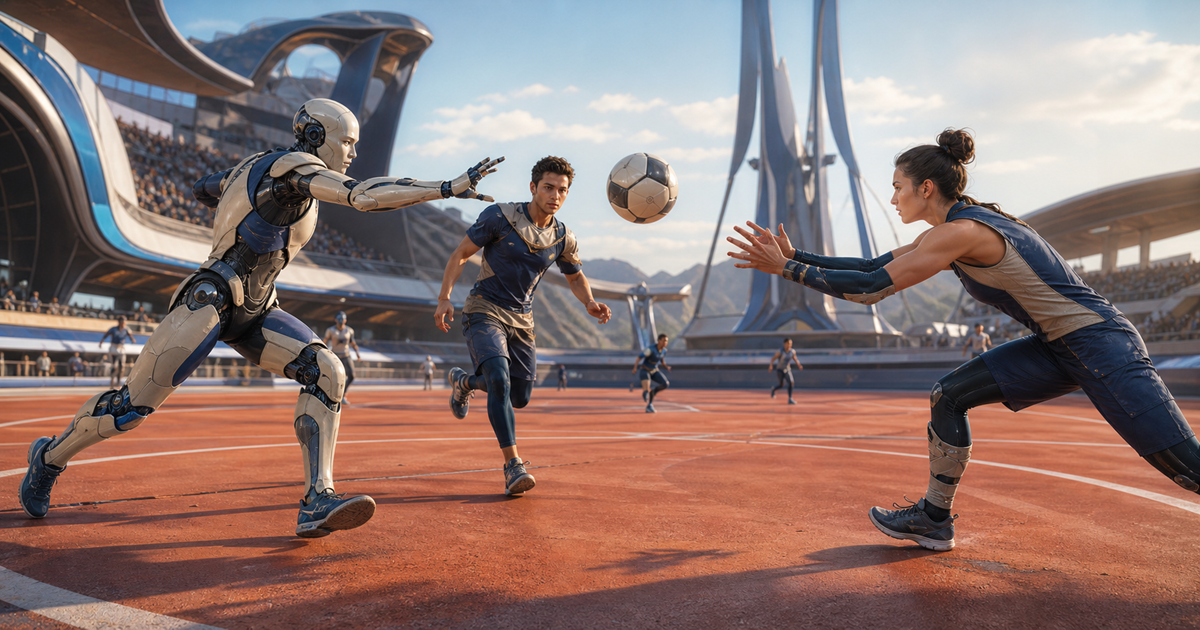
Multiplayer games are one of the strongest applications for intelligent game agents.
Player populations can change significantly depending on time, region, game mode, and platform.
AI agents can help studios maintain consistent experiences by supporting:
- Incomplete teams
- Off-peak matchmaking
- Training modes
- Player onboarding
- Disconnected players
- Cooperative gameplay
For example, when there are not enough players to form a complete team, an AI agent can fill the missing role and allow the match to begin.
The agent does not necessarily need to behave exactly like a human player. It needs to perform its role effectively enough to maintain the intended gameplay experience.
Game Agents for NPCs and Immersive Worlds
Game agents can also make large virtual worlds more dynamic.
In an open-world game, hundreds or thousands of characters may interact with players and with one another.
Instead of assigning every character a fixed sequence of behaviors, developers can use intelligent agents to create more flexible interactions.
Different characters can have different:
- Goals
- Personalities
- Priorities
- Relationships
- Behavioral constraints
This can contribute to worlds that feel more reactive and less predictable.
Using Game Agents for Simulation and Testing
Game agents are not limited to characters that appear directly in front of players.
Developers can also use agents to simulate gameplay scenarios during development.
Multiple agents can be used to explore:
- Combat strategies
- Game balance
- Economy systems
- Resource allocation
- Multiplayer behavior
- Level difficulty
Large-scale simulation can help developers discover situations that may be difficult to identify through manual testing alone.
For complex games, this can provide another way to evaluate how systems behave under different conditions.
Scaling Game Agents for Production
Building one intelligent agent is very different from deploying thousands of agents in a live game.
Production deployment introduces additional requirements, including:
- Low-latency decision-making
- Reliable infrastructure
- Concurrent agent management
- Monitoring
- Cost control
- Integration with existing backend systems
Studios need to understand how an AI system will perform as player numbers increase.
A solution that works well in a development environment may need significant optimization before it can support a large live game.
Keeping Developers in Control
Autonomous behavior should not mean uncontrolled behavior.
Game designers still need to define the boundaries within which an agent can operate.
Important controls may include:
- Agent objectives
- Available actions
- Character knowledge
- Gameplay restrictions
- Behavioral rules
- Performance limits
This allows AI agents to be flexible while remaining consistent with the game's design.
For competitive games, these controls are particularly important because AI behavior can directly affect fairness and player trust.
Benefits of Gamebot Game Agents
For developers and studios, intelligent game agents can provide several advantages.
More Dynamic Gameplay
Agents can respond to changing conditions instead of repeating identical behaviors.
More Efficient AI Development
Developers can build adaptive behaviors without manually scripting every possible interaction.
Better Multiplayer Availability
AI agents can help maintain playable matches when human player populations are limited.
More Engaging Characters
NPCs and companions can react more naturally to players and game events.
Expanded Testing Capabilities
Agents can simulate large numbers of gameplay situations and help developers evaluate complex systems.
Challenges of Building Intelligent Game Agents
Game agents also introduce new development challenges.
Predictability
Highly autonomous agents can behave in unexpected ways. Developers need effective testing and monitoring to ensure that behavior remains appropriate.
Latency
Real-time games require fast responses. Slow agent decisions can negatively affect the player experience.
Cost and Infrastructure
Running many intelligent agents simultaneously can require significant computing resources.
Game Design Alignment
An agent may make a strategically optimal decision that is not necessarily fun for the player.
The goal should therefore be to create agents that support the intended experience, rather than simply maximizing their ability to win.
The Future of Game Agents
As AI technology develops, game agents are likely to become increasingly capable.
Future systems may support:
- Persistent AI companions
- Long-term character memory
- More sophisticated team coordination
- Dynamic game worlds
- Personalized gameplay
- Large-scale multi-agent simulations
This could lead to games where AI characters are not simply scripted participants but active components of evolving virtual environments.
Developers will still define the rules, objectives, and creative direction. AI agents can provide the adaptive layer that makes those environments more responsive.
Conclusion
Gamebot game agents represent an important direction in the development of intelligent gameplay.
From NPCs and AI teammates to opponents and large-scale simulations, game agents can help developers move beyond rigid scripted behaviors and create more adaptive experiences.
The most effective approach is not to replace traditional game development with AI. Instead, developers can combine established game systems with intelligent agents, giving AI enough autonomy to respond dynamically while maintaining clear control over gameplay.
As games become more complex and player expectations continue to rise, intelligent game agents can provide developers with a flexible foundation for building more responsive, engaging, and scalable gaming experiences.