GameBot for Game Studios: Scaling Intelligent Game Agents Across Modern Games

Artificial intelligence is becoming an increasingly important part of game development, but implementing AI at the studio level presents challenges that go beyond building a single intelligent character.
Game studios need to think about multiple projects, different game genres, live operations, player populations, development teams, and production infrastructure. An AI system that works well in a prototype may not be sufficient when it needs to support a live game with thousands or millions of player interactions.
This is where Gamebot for game studios can provide a practical foundation for integrating intelligent game agents into modern gaming experiences.
Instead of treating AI as an isolated feature, studios can use AI agents across different parts of a game, from NPCs and teammates to opponents, player simulations, and live-game systems.
Why Game Studios Are Investing in Game AI
Game development has become increasingly complex. Players expect richer worlds, smarter characters, and more responsive multiplayer experiences, while studios need to continuously release updates and maintain live games.
Traditional AI systems remain useful, but they can require extensive manual development.
For example, creating sophisticated NPC behavior may involve designing:
- Behavior trees
- Decision systems
- Dialogue logic
- State machines
- Gameplay triggers
- Character-specific rules
As the number of characters and gameplay situations increases, maintaining these systems can require substantial engineering and design resources.
AI agents offer another approach by allowing certain behaviors to be generated or adapted dynamically.
What Can Gamebot Offer Game Studios?
For a game studio, the value of an AI platform is not limited to creating one smart NPC. The larger opportunity is to introduce intelligent agents across multiple gameplay scenarios.
These applications can include:
- AI NPCs
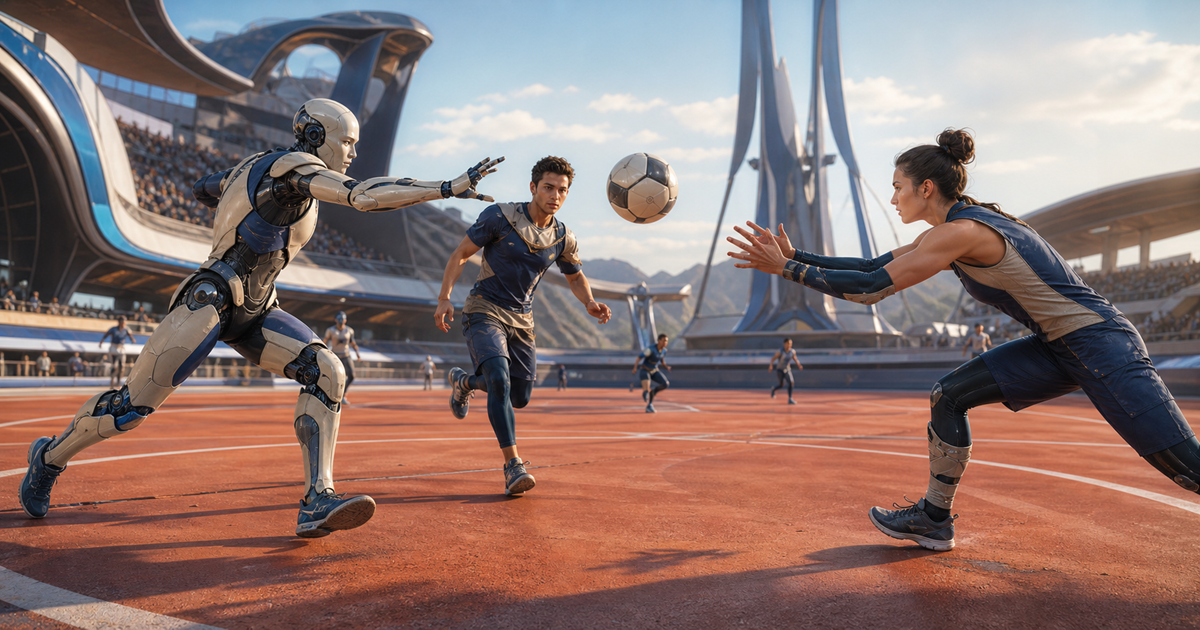
- AI teammates
- AI opponents
- Player simulation
- Game testing
- Dynamic difficulty
- Multiplayer support
- Large-scale agent environments
This makes AI potentially useful throughout the development and live-operation lifecycle.
1. Building Intelligent NPCs at Scale
NPCs are an important part of many modern games, particularly RPGs, open-world games, and simulation experiences.
Studios can use AI agents to create characters that respond to players in more dynamic ways.
AI-powered NPCs can potentially:
- Understand contextual interactions
- Generate natural responses
- Remember relevant player actions
- Adapt behavior over time
- React to changes in the game world
Instead of creating every possible dialogue branch manually, developers can combine AI capabilities with carefully defined character goals, knowledge, and behavioral constraints.
This approach can make large game worlds feel more responsive while maintaining appropriate developer control.
2. Deploying AI Teammates Across Multiplayer Games
Multiplayer games often experience fluctuations in player populations.
During peak hours, there may be enough players to create full teams. During off-peak periods, however, matchmaking can become slower and less reliable.
AI teammates can help studios address these problems by filling missing positions and supporting multiplayer experiences when human player availability is limited.
They can also help with:
- New player onboarding
- Cooperative gameplay
- Disconnected players
- Training modes
- Casual matches
The objective is to ensure that players can continue participating in meaningful gameplay even when a full human team is unavailable.
3. Creating More Adaptive AI Opponents
Game studios also need opponents that can provide engaging challenges.
If opponents are completely predictable, experienced players may quickly learn how to defeat them.
Intelligent game agents can instead analyze the current game state and adapt their decisions.
For example, an AI opponent could consider:
- Player tactics
- Team composition
- Available resources
- Current objectives
- Previous actions
This allows studios to create more varied gameplay without manually scripting every possible strategy.
4. Supporting Game Development and Testing
AI agents can also be useful before a game reaches players.
Studios can use agents to simulate different gameplay scenarios and identify potential problems.
For example, large numbers of agents can help developers explore:
- Combat balance
- Game economy behavior
- Level difficulty
- Multiplayer strategies
- Resource distribution
- Player-like decision patterns
Instead of relying entirely on manual testing, studios can use AI-powered simulations to examine game systems under a broader range of conditions.
This can be particularly useful for complex games where interactions between different systems are difficult to predict.
From Prototype to Production
One of the biggest differences between individual experimentation and studio-level AI deployment is scale.
A developer can create a prototype using a single AI agent. A studio needs to determine whether that agent can eventually operate reliably as part of a production game.
This raises several important questions:
- How many agents can run simultaneously?
- How quickly can agents respond?
- How much computing infrastructure is required?
- How does the system behave under peak demand?
- Can developers monitor and adjust agent behavior?
- Can the technology integrate with existing game systems?
A production-focused approach needs to address these questions early rather than treating scalability as a later concern.
Integrating AI Into Existing Game Infrastructure
Game studios rarely have the option to rebuild an entire game around AI.
Most already have established:
- Game engines
- Backend services
- Player databases
- Matchmaking systems
- Analytics platforms
- Live-operations infrastructure
AI therefore needs to work alongside these existing systems.
A practical integration might allow a game to provide an AI agent with information about the current environment, such as player actions, objectives, available resources, and nearby entities.
The agent then evaluates the situation and returns an action that can be processed by the game's existing gameplay systems.
This architecture allows studios to introduce intelligent behavior without replacing the underlying game infrastructure.
Managing AI Across Multiple Game Projects
For larger studios, another challenge is consistency.
A studio may operate several games, each with different:
- Genres
- Engines
- Player populations
- Gameplay mechanics
- AI requirements
A scalable AI solution should therefore provide enough flexibility to support different projects while allowing individual development teams to maintain control over their games.
The goal is not to make every game use identical AI.
Instead, studios should be able to adapt AI capabilities to the specific requirements of each title.
AI for Live Games
AI can be particularly valuable after a game has launched.
Live games need continuous improvements to maintain player engagement.
Studios can potentially use AI agents to support:
- Off-peak matchmaking
- Dynamic challenges
- Player onboarding
- Personalized assistance
- New gameplay modes
- Game-system simulations
For example, a studio could introduce AI teammates during periods of low player activity and rely more heavily on human matchmaking when player populations are high.
This creates a more flexible multiplayer environment.
The Importance of Developer Control
Greater AI autonomy does not mean developers should give up control.
Game studios still need to determine:
- What an AI agent is allowed to do
- What information it can access
- Which objectives it should prioritize
- How it should interact with players
- When specific behaviors should be disabled
AI systems should operate within the rules and goals defined by the game's designers.
This balance between autonomy and control is particularly important for competitive games, where unpredictable AI behavior could affect fairness.
Benefits of Gamebot for Game Studios
A studio-oriented approach to game AI can provide several potential benefits.
Faster AI Development
Studios can reduce the amount of infrastructure they need to build internally and allow development teams to focus on gameplay.
More Flexible Game Experiences
AI agents can respond to changing game states, creating experiences that are less dependent on fixed scripts.
Better Multiplayer Availability
AI teammates can help maintain playable matches when human player populations fluctuate.
More Efficient Testing
AI agents can simulate large numbers of gameplay scenarios and help teams identify potential balance or design problems.
Greater Long-Term Potential
Once an AI infrastructure is established, studios can explore multiple applications rather than developing a completely separate system for every new AI feature.
Challenges for Game Studios
Despite the potential benefits, studios should carefully evaluate AI before deploying it in production.
Performance and Latency
Real-time games require responsive systems. AI decisions that take too long can negatively affect gameplay.
Scalability
A solution needs to support the expected number of concurrent agents and players without creating excessive infrastructure costs.
Behavioral Consistency
AI agents need to remain within the intended boundaries of the game design.
Testing and Monitoring
Because AI can produce more variable behavior than traditional scripts, studios need processes for testing, monitoring, and improving agent performance.
The Future of AI for Game Studios
As AI agents become more capable, their role in game development is likely to expand.
Future applications could include:
- Persistent AI companions
- Intelligent populations in open-world games
- AI-driven game testing
- Adaptive multiplayer systems
- Personalized gameplay experiences
- Large-scale virtual-world simulations
For studios, the long-term opportunity is not simply to add AI characters to existing games. It is to build game systems where intelligent agents can interact with players, environments, and other agents in meaningful ways.
Conclusion
Gamebot for game studios represents an approach to bringing intelligent game agents into both game development and live operations.
From NPCs and AI teammates to adaptive opponents and large-scale simulations, AI can support many different stages of a game's lifecycle.
The most effective implementations will combine autonomous AI behavior with strong developer control, reliable infrastructure, and seamless integration with existing game systems.
For game studios exploring AI, the key question is no longer simply whether to use artificial intelligence. It is how to deploy intelligent agents in a way that scales with the game's technology, player community, and long-term development goals.