Gamebot for Game Developers: Building Smarter and More Adaptive Game Experiences

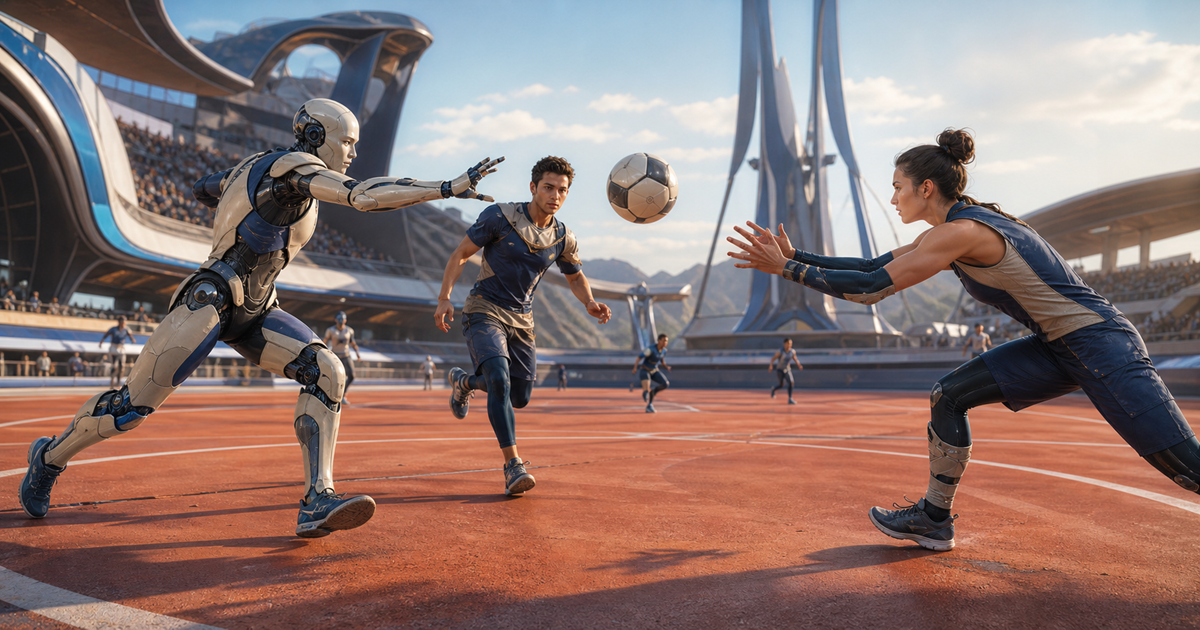
Artificial intelligence is changing how games are designed and developed. From intelligent NPCs to adaptive opponents and AI teammates, developers now have more ways to create game experiences that respond to player behavior in real time.
However, adding AI to a game is not simply a matter of connecting a model to a game engine. Developers need to consider gameplay logic, agent behavior, real-time performance, scalability, and integration with existing systems.
This is where Gamebot for game developers can provide a practical approach to building and deploying intelligent game experiences.
Rather than replacing traditional game development, AI can work alongside existing gameplay systems to make characters more responsive, multiplayer experiences more flexible, and game worlds more dynamic.
What Can AI Do for Game Developers?
Traditional game AI is usually based on predefined rules and behavior trees. These systems remain useful for many gameplay mechanics, but they can become difficult to manage when developers want characters to respond to complex or unexpected situations.
AI-powered game agents can introduce additional capabilities, including:
- Real-time decision-making
- Adaptive behavior
- Natural interaction
- Player behavior modeling
- Intelligent cooperation
- Dynamic responses to changing game states
For developers, this means AI can become another layer of the gameplay stack rather than a replacement for existing game logic.
Gamebot for Game Developers: Key Use Cases
There are several areas where developers can use intelligent game agents to improve gameplay.
1. Building Intelligent NPCs
NPCs are one of the most obvious applications for game AI.
Traditional NPCs often depend on predefined dialogue and behavior patterns. While this provides developers with precise control, it can also make interactions repetitive.
AI-powered NPCs can support more dynamic behavior by responding to:
- Player actions
- Game context
- Previous interactions
- Character goals
- Changes in the game environment
For example, an NPC companion could react differently depending on how a player has interacted with the character throughout the game.
This can make virtual characters feel more responsive without requiring developers to manually script every possible interaction.
2. Creating AI Teammates
AI teammates can help developers address common problems in multiplayer games.
Players may encounter incomplete teams, long matchmaking times, or situations where a teammate disconnects. Intelligent game agents can help fill these gaps while maintaining the intended gameplay experience.
Depending on the game, AI teammates can:
- Fill missing team positions
- Follow strategic objectives
- Support human players
- Adjust to changing situations
- Help new players learn the game
The goal is not simply to add another bot to the match. An effective AI teammate should understand its role and contribute meaningfully to the team's objectives.
3. Developing Adaptive AI Opponents
Predictable opponents can quickly become less interesting for experienced players.
AI agents can help developers create opponents that respond to player strategies instead of following exactly the same behavior every time.
For example, an intelligent opponent could adjust its tactics based on:
- Player movement
- Previous actions
- Team composition
- Available resources
- Current match conditions
This can support more dynamic competitive experiences while giving developers additional options for difficulty design.
4. Supporting Player Onboarding
AI can also play an important role in helping new players learn a game.
An AI teammate or companion can provide contextual assistance instead of relying entirely on static tutorials.
For example, an AI character could:
- Explain a game mechanic when needed
- Demonstrate a strategy
- Provide tactical suggestions
- Adjust its level of assistance
This can create a smoother onboarding experience without interrupting gameplay with excessive tutorial screens.
Why Developers Need More Than an AI Model
One of the biggest challenges in game AI is that a general-purpose AI model does not automatically become a useful game agent.
A production game agent needs to interact with the actual game environment.
It must understand information such as:
- Player position
- Available actions
- Game objectives
- Health and resources
- Team status
- Environmental conditions
It then needs to turn that information into actions that are appropriate for the game.
This requires a connection between the AI agent and the game's existing systems.
A practical game AI solution therefore needs to consider both intelligence and integration.
Integrating AI With Existing Game Development
Most game developers are not starting from scratch. They already have game engines, backend services, gameplay systems, analytics infrastructure, and established development workflows.
For that reason, AI integration should fit into the existing technology stack rather than require an entirely separate development process.
A game AI implementation may involve several layers:
Game environment → Agent perception → Decision-making → Game action → Feedback
The agent receives information from the game, evaluates the situation, selects an action, and then receives feedback from the resulting state.
This feedback loop allows the AI system to respond continuously as gameplay changes.
AI Agents vs. Scripted Bots
Scripted bots remain valuable for many games. They are predictable, controllable, and relatively easy to test.
However, they can become difficult to maintain when developers need many different behaviors.
AI agents offer a different approach.
| Scripted Bots | AI Game Agents |
|---|---|
| Predefined behaviors | Adaptive behaviors |
| Fixed decision logic | Context-aware decisions |
| Predictable responses | More dynamic responses |
| Manual behavior design | AI-assisted decision-making |
| Limited variation | Greater behavioral flexibility |
The right approach depends on the game.
In many production environments, the most effective solution may be a combination of traditional game logic and AI agents. Developers can keep deterministic systems where precise control is important while using AI where adaptive behavior provides additional value.
Scalability Matters for Game Developers
An AI system that works well in a prototype may not necessarily work well in a live game.
Once an AI feature reaches production, developers may need to support:
- Large numbers of concurrent players
- Multiple AI agents
- Real-time interactions
- Different game modes
- Continuous gameplay sessions
Performance and infrastructure therefore become critical considerations.
For multiplayer games in particular, AI agents need to respond quickly enough that their decisions do not negatively affect the player experience.
A scalable approach allows developers to experiment with AI during development and then extend successful features to larger player populations.
Using AI Across Different Game Genres
The requirements for AI vary significantly between game genres.
Multiplayer Shooters
AI agents can serve as teammates or opponents, helping maintain balanced matches and filling empty positions.
Role-Playing Games
AI NPCs can support dynamic conversations, companion behavior, and more personalized interactions.
Strategy Games
Agents can analyze game states and make tactical decisions involving resources, positioning, and objectives.
Simulation Games
Large populations of AI agents can model complex behaviors and interactions within virtual environments.
Cooperative Games
AI teammates can help players complete objectives when human teams are incomplete.
This flexibility makes game agents useful across a wide range of development scenarios.
Benefits of Gamebot for Game Developers
For development teams, adopting an AI-focused solution can provide several practical benefits.
Faster AI Development
Developers can use existing AI infrastructure rather than building every agent capability internally.
This can reduce the engineering effort required to experiment with intelligent gameplay features.
More Dynamic Gameplay
AI agents can respond to changing game states and player actions, creating less predictable experiences.
Better Player Experiences
Intelligent teammates, NPCs, and opponents can make games feel more responsive and engaging.
Greater Development Flexibility
AI can be introduced into existing games without requiring developers to redesign every gameplay system around artificial intelligence.
What Developers Should Consider Before Adding Game AI
AI is not automatically the right solution for every gameplay problem.
Before implementing an AI agent, developers should consider:
Gameplay Goals
What problem is the AI solving?
A clear objective helps determine whether an autonomous agent, traditional bot, or another system is the best solution.
Developer Control
Game designers need to be able to define appropriate boundaries for AI behavior.
AI should support the intended game design rather than create unpredictable outcomes that undermine it.
Performance
Real-time games require responsive AI.
Latency, compute requirements, and concurrent agent workloads should be considered from the beginning.
Testing
AI behavior can be more variable than scripted behavior.
Developers therefore need effective testing and monitoring processes to identify unexpected behaviors and maintain consistent gameplay quality.
The Future of AI for Game Developers
As AI technology continues to evolve, developers will have more opportunities to build games around intelligent agents.
Future applications may include:
- Persistent AI companions
- Adaptive game worlds
- More personalized NPCs
- AI-driven multiplayer teammates
- Dynamic game content
- Large-scale agent simulations
The most important development may not be AI replacing existing game systems, but AI becoming another flexible tool within the developer's toolkit.
Game developers can combine traditional programming, game design, machine learning, and autonomous agents to create experiences that are both controllable and adaptive.
Conclusion
Gamebot for game developers represents a broader shift toward integrating intelligent agents into modern game development.
AI can help developers create smarter NPCs, adaptive opponents, intelligent teammates, and more responsive gameplay without abandoning the systems that already make their games work.
The key is to treat AI as part of the overall game architecture. With the right combination of agent intelligence, developer control, integration, and scalable infrastructure, game studios can use AI to build experiences that are more dynamic and engaging while maintaining control over the player experience.