GameBot for Game Studios: A Practical Look at AI Bots in Live Titles

Running a live-service multiplayer game means constantly balancing player experience, operational overhead, and finite internal engineering resources. Many studios want to leverage in-game AI but hesitate at the prospect of building complex bot and agent systems completely from scratch. Even after identifying clear pain points such as long off-peak queues or weak new-player retention, teams must weigh vendor options carefully: technical fit, integration effort, real-world ROI, and long-term operational risk all factor into the final decision. This article breaks down what GameBot for game studios actually delivers, draws on real-world case data, and outlines key questions every development team should ask before bringing in an external AI partner.
What GameBot Solves for Game Studios in Live Service
GameBot for game studios targets recurring pain points that commonly trouble live-operations teams. These challenges rarely have simple in-house fixes, especially for midsized teams with limited headcount for AI research and development.
First, inconsistent lobby quality during off-peak hours. Player populations naturally fluctuate across time zones, which creates long queue times or lopsided matches when human participant numbers drop. Many studios lack the bandwidth to build, tune, and maintain robust auto-fill bot behaviour for multiple game modes.
Second, new-player friction. Beginners often feel intimidated playing against seasoned human opponents. Confidence-oriented, bot-assisted lobbies can lower this social pressure, but designing fair, human-feeling bots demands repeated playtesting and tuning.
Third, heavy QA workload for balance validation. Testing weapon adjustments, economy changes, and large-scale system updates requires massive play volume. Traditional manual QA cannot simulate thousands of concurrent player behaviours efficiently.
It is worth emphasising that external AI tooling does not cure fundamental design flaws. Poor core gameplay, confusing progression loops, or broken matchmaking logic will remain problematic even after you bring in third-party agents. GameBot for game studios works best as a layer to amplify good existing game design, rather than rescue a troubled product.
A Closer Look at GameBot Inc as an AI Partner
When evaluating any external vendor, studios need to look past feature lists and examine real-world operational credentials. GameBot Inc has shipped agent capabilities across titles deployed in 65+ countries and regions, supporting both blockbuster mobile multiplayer games and mid-tier studio projects.
Production-scale metrics offer further context. Its infrastructure handles approximately 17 billion annual player-agent interactions, with peak capacity supporting 3 million concurrent AI agent instances. This level of scale matters for live-service games; a proof-of-concept demo can behave very differently under real-world, high-concurrency player traffic.
Beyond raw scale, the team focuses on game-specific constraints: server-authoritative bot execution, anti-cheat-friendly architecture, and configurable guardrails for AI-driven NPC behaviour. Unlike general-purpose LLM providers whose systems are built for generic text generation, this stack is built from the ground up for real-time multiplayer game environments.
Even with solid credentials, every studio should run its own technical due diligence. Vendor track record does not remove the need for proof-of-concept testing within your own game engine and server stack.
GameBot for Game Studios Case Study: FPS Churn
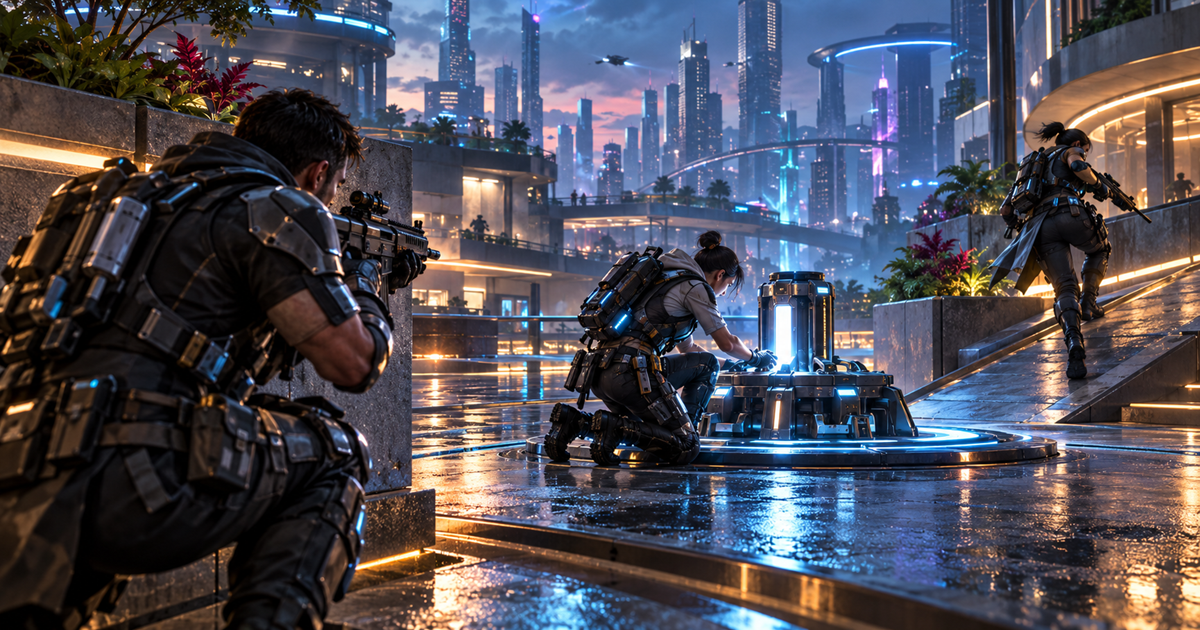
One practical production example comes from a global multiplayer shooter title, within the same genre as other battle royale shooters featured in our success stories portfolio. The studio faced persistent new-player churn across 14 regional markets. Off-peak queues frequently stretched long, and fresh users were often matched against highly skilled veteran human players right out of onboarding.
The team rolled out two key capabilities powered by GameBot for game studios: population-triggered auto-fill bots for casual lobbies, plus confidence-building bot opponents for new-player-only matchmaking pools. Bots operated under the exact same game rules as human users with no hidden stat advantages.
After a controlled, phased rollout, aggregated, anonymised telemetry showed an average three-day retention lift of 4% across those 14 markets. The maximum one-day retention improvement reached 13.9%. The project also observed a meaningful reduction in average off-peak matchmaking wait times.
Important caveats apply. These results reflect that specific title, its player base, and its bot configuration. Your own results will vary based on genre, audience, baseline metrics, and how you tune agent parameters.
Costs, Integration, and Risks Studios Should Weigh
Many studios underestimate both integration labour and potential risks when adding third-party agent technology. Even capable platforms require careful planning.
On integration effort: basic casual-mode bot filling represents a lighter lift. Dynamic NPC behaviour and large-scale multi-agent simulation require substantially more engineering work. Your backend team must maintain server authority for all gameplay actions, handle payload serialisation, implement timeout fallbacks, and build monitoring for agent-related events.
Key risks to consider:
- Overreliance on agent tools without retaining internal tuning capacity: vendor tooling provides building blocks, but your designers still own bot behaviour configuration.
- Misaligned expectations: expecting instant, large metric improvements without phased testing and iteration.
- Operational cost scaling as your DAU and agent instance count grow.
There is no universal price tag; actual costs depend on feature scope, agent volume, and commercial agreement. The most practical approach is to start with a narrow proof of concept, then validate technical compatibility and baseline KPIs before committing to a full-feature rollout.
You can review official materials through the GameBot Blog and contact the team for detailed commercial and technical information.
How to Decide If GameBot Is Right for Your Studio
Before making a vendor decision, work through a short internal checklist:
- Do we have clear, measurable pain points around matchmaking quality, new-player onboarding, or large-scale QA simulation?
- Can we allocate at least some backend engineering bandwidth for integration and ongoing agent tuning?
- Are we prepared to run phased rollouts and gather real-player telemetry, instead of expecting immediate, perfect results?
- Is our core gameplay loop already solid, so agent tooling can enhance rather than attempt to rescue player experience?
If you can answer yes to most of these points, then exploring GameBot for game studios as an AI partner makes practical sense. If you lack engineering bandwidth or are still resolving fundamental core-game issues, delaying third-party agent adoption is often the wiser call.
Conclusion
For live-service multiplayer teams, GameBot for game studios delivers production-ready adaptive bots, NPC agents, and simulation infrastructure backed by large-scale global deployment experience. Real-world shooter-title case studies demonstrate measurable improvements to retention and lobby quality, yet positive outcomes depend on realistic expectations, sufficient engineering resources, and thoughtful, phased rollout.
GameBot Inc supplies the tooling and runtime infrastructure, but your studio retains responsibility for design choices, bot tuning, and validating player sentiment. When deployed under the right project conditions, this kind of external game AI partnership can reduce internal development burden while lifting key player-experience metrics.