How Game for Peace Deployed Humanlike AI Bots to Boost DAU and Retention

Project Overview
Game for Peace is a popular mobile TPS/FPS tactical shooter title. Faced with persistent player-experience pain points across its large player community, the development team set out to build a new generation of humanlike high-performance AI bots. Core project goals included addressing poor communication among randomly matched human teammates, softening the steep onboarding learning curve for new users, and fixing underperforming bot navigation within complex threedimensional maps. The broader business objective was to drive improvements in overall DAU and long-term player retention.
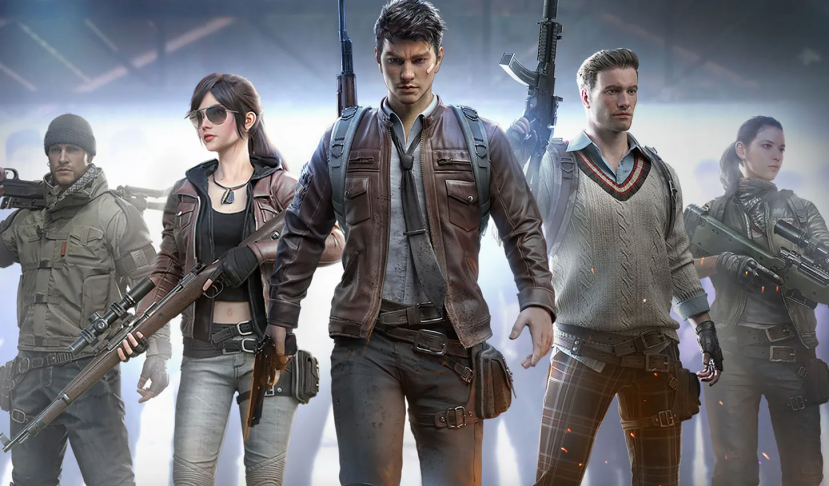
In many teambased mobile shooters, randomly paired human teammates often lack reliable in-game communication channels. This creates disjoint squad play, which hits inexperienced players hardest. The Game for Peace team wanted AI agents that could act as capable, naturalfeeling squad participants rather than obvious scripted bots. Beyond pure combat performance, the project also explored innovative player-engagement approaches including voice-driven teamwork and IP-based AIpowered NPC experiences.
Business Challenges With Communication Gaps And Steep Learning Curves
Before rolling out the GameBot-powered bot system, the title struggled with three interwoven player-experience challenges.
First, randomly matched human teammates frequently operated with little to no effective tactical coordination. Without built-in reliable communication, squads often acted in isolation. Team play felt fragmented and reduced satisfaction for users expecting cooperative shooter gameplay.
Second, new players confronted an extremely steep learning curve. Novice users were regularly placed into matches against farmoreskilled opponents. Frustration accumulated quickly and contributed to higher earlysession player churn. Existing bot systems offered limited support to help beginners learn core game mechanics.
Third, legacy bot implementations demonstrated poor performance inside complex 3D environments. Older agents struggled with obstacle avoidance, terrain navigation and contextaware positioning across large, detailed maps. Bots failed to behave as credible teammates, which limited their usefulness for both fillin duties and practice scenarios.
Taken together, these issues held back squadmode quality and created barriers for new-player growth. Simply tweaking existing behaviour-tree parameters was insufficient to resolve navigation gaps, communication deficits and onboardingrelated frustration at scale.
Solution: Hybrid Training Framework With Strategic Teammates And Voice Interaction
Game for Peace integrated GameBot’s hybrid training framework, which was designed to balance solid tactical bot performance alongside rich player participation features. The delivered solution covered four major capability sets: strategic RLdriven teammates, LLM-based voice interaction, confidence-building assistance mechanics, and celebritythemed AI NPC support.
Strategic Teammate capabilities were built on reinforcementlearning models. These AI teammates could make fast tactical decisions, navigate around obstacles, and move intelligently through complicated threedimensional terrain. The goal was bot behaviour that closely mirrored the decision-making of competent human squad members during live firefights and map traversal.
Voice Interaction leveraged an LLMbacked speech model. AI bots were able to communicate tactical suggestions via in-game voice, coordinate with human squadmates, and interpret emotional cues from player voice input. When the system detected signs of player frustration or fatigue, bots could deliver encouraging voice feedback to ease negative sentiment during difficult matches.
Confidence-building mechanics gave bots controlled intervention authority during key in-game moments. AI agents would step in to help players overcome setbacks: recommending optimal weapon attachments, calling out tactical opportunities, and assigning simple achievable in-game tasks. This supportive framework was built to guide newer users and push overall retention metrics upward.
As an experimental engagement and monetisationexploration feature, the team enabled Celebrity NPC functionality. An AIdriven NPC modelled after wellknown Chinese artist Hua Chenyu was brought online. This character could participate in strategic combat and full squad cooperation, opening new possibilities for player engagement and alternative revenue streams within the game.
Key Implementation Decisions
Multiple high-level technical and product decisions shaped this production rollout. No customproduced architecture diagrams, flowcharts or implementation screenshots were published for this deployment.
The primary technical choice was adopting a hybrid training framework. Rather than optimising purely for combat win rates, the system balanced tactical competence together with human engagement signals. This ensured bots were capable in combat while also supporting voice-based interaction and confidence-building assistance workflows.
A second major decision was integrating an LLMpowered voice interaction pipeline. This added complexity around speech input processing, emotioncue recognition and contextappropriate voice output, but unlocked naturalfeeling verbal squad coordination that traditional scriptedaudio bots could not deliver.
Thirdly, product leadership chose to launch the celebrity-based AI NPC as a live experimental feature. This allowed the studio to explore innovative player-engagement and monetisation patterns built upon AI agent technology alongside core shooter gameplay.
Across all features, fallback rulebased logic remained active. This protected match stability in edgecase runtime conditions even when learning-based or LLMdriven components encountered unexpected inputs.
Project Outcomes
There are no publiclyreleased granular percentage-based quantitative metrics available for this Game for Peace deployment; all published results are qualitative production observations.
Following deployment of the hybridframework bot system, internal production observations indicated improved DAU. The newfocused confidence-building mechanisms and voice-assisted teammate features contributed toward retentionimprovement goals.
Strategic teammate bots delivered muchimproved navigation and tactical judgement within complex threedimensional maps. AI agents functioned as morebelievable squad participants, partially offsetting communication limitations among randomly matched human players.
The voice interaction module brought a new cooperative layer to squad play, with bots capable of tactical voice communication and emotionaware encouragement. The celebrity AI NPC demonstrated potential for fresh engagement and monetisation pathways for live-operation events.
Key Takeaways For Game Development Teams
The Game for Peace implementation yields actionable insights for shooter studios building AI squadmate systems.
First, creating believable bot teammates for complex 3D map environments demands more than behaviour-tree tuning. Reinforcementlearningenhanced agent frameworks can substantially improve navigation and tactical decision-making in large, obstaclerich game worlds.
Second, multimodal interaction such as LLMdriven voice support can meaningfully elevate cooperative player experience. Beyond combat performance, emotionalcueaware feedback helps mitigate new-player frustration and supports retention targets.
Third, IPlicensed or celebritythemed AI NPCs represent a differentiated liveops lever. These experimental features can drive fresh player engagement and open alternative monetisation opportunities when built safely on top of stable agent infrastructure.